
Wednesday, 23 June 2010


Tuesday, 22 June 2010
symbolizing animals
Ernest Cassirer was a German philosopher and historian of ideas, often typed as one of the leading exponents of neo-Kantian thought in the 20th century. His major works include The Philosophy of Symbolic Forms (1923-29). Cassirer saw that human beings were above all a symbolizing animals. The whole range of our achievements, are unique parts of our evolutionary process and help us to understand our experience and the world.
Cassirer considered all forms of intellectual activity creative. As a symbol-creating animal, human being is the product of a new mutation in life. Science, language, art, religion, mythology , they all are man-made worlds, expressing the creativity of spirit, or mind, itself. In this capacity they help us to articulate our experience and our knowledge. Symbolic forms have great creative powers but they can also be destructive. Aware of full horrors of Nazism, Cassirer saw that whole nations could fell victims of political myths. When intellectual, ethical and artistic forces lose their strength, mythical thought start to emerge and pervade the whole of man's cultural and social life.
Cassirer considered all forms of intellectual activity creative. As a symbol-creating animal, human being is the product of a new mutation in life. Science, language, art, religion, mythology , they all are man-made worlds, expressing the creativity of spirit, or mind, itself. In this capacity they help us to articulate our experience and our knowledge. Symbolic forms have great creative powers but they can also be destructive. Aware of full horrors of Nazism, Cassirer saw that whole nations could fell victims of political myths. When intellectual, ethical and artistic forces lose their strength, mythical thought start to emerge and pervade the whole of man's cultural and social life.
Monday, 21 June 2010
ποιητής της συμφοράς
φαντάστηκε με σπαρακτική μανία τους λόφους της
τις κοιλιές της, τις απωλεσμένες πόλεις της
ακατάσχετα περιγράφοντας το μέσα του ως έξω της'
και είδε τα νωτισμένα του συκώτια διάσπαρτα στα χωράφια της
και τα μάτια του να κυλάνε στους δρόμους
τους νεφρούς του ν'ατιμάζουν τις παρειές , τις πλάτες της
το φλέγμα του να στάζει από τους στήλους στις πλατείες,
τις αρτηρίες του ανάκατες με τη χολή να λιώνουνε
στους τοίχους και τα κράσπεδα'
κι εκείνη δεν είχε άλλο να κάνει απ'το να τον αφήσει
ν' απλώσει ως και τα κόκκαλά του πάνω στη γη της
(γιατί η ηχώ δεν έφτανε για να σκεπάσει την αγωνία του λόγου του
να του πει πως δεν χρειάζεται να κομματιάζεται άλλο στα κάτοπτρα)
Και δέχτηκε το μακάβριο δώρο του ήσυχα, άφηνοντας τον ήλιο
να λευκάνει τα λείψανα της ψυχής του.
τις κοιλιές της, τις απωλεσμένες πόλεις της
ακατάσχετα περιγράφοντας το μέσα του ως έξω της'
και είδε τα νωτισμένα του συκώτια διάσπαρτα στα χωράφια της
και τα μάτια του να κυλάνε στους δρόμους
τους νεφρούς του ν'ατιμάζουν τις παρειές , τις πλάτες της
το φλέγμα του να στάζει από τους στήλους στις πλατείες,
τις αρτηρίες του ανάκατες με τη χολή να λιώνουνε
στους τοίχους και τα κράσπεδα'
κι εκείνη δεν είχε άλλο να κάνει απ'το να τον αφήσει
ν' απλώσει ως και τα κόκκαλά του πάνω στη γη της
(γιατί η ηχώ δεν έφτανε για να σκεπάσει την αγωνία του λόγου του
να του πει πως δεν χρειάζεται να κομματιάζεται άλλο στα κάτοπτρα)
Και δέχτηκε το μακάβριο δώρο του ήσυχα, άφηνοντας τον ήλιο
να λευκάνει τα λείψανα της ψυχής του.
Saturday, 19 June 2010
αντίστροφο αντισύμπαν
Υπάρχει μια μέρα πιο φωτεινή απ’ τη μέρα.
Όποιος βγαίνει σ’ αυτήν, συναντάει το χρόνο,
μιλάει κοινά, συνδέοντας το έξω με το μέσα,
ζει τη ζωή, με μια γαλήνη σαν θάλασσα
απλωμένη αέναα στο στήθος, εξυψωμένος
απ’ τη βία και βλέποντας αυτό που βλέπει ο άλλος,
πλάι με τις γενναιόψυχες υπενθυμίσεις των άστρων.
Η νύχτα εδώ διαβάζεται ορθά,
και τούτος ο κόσμος γίνεται η ανάσα τού κόσμου
όπου όλοι εκκινούμε ως άλλοι.
Όποιος βγαίνει σ’ αυτήν, συναντάει το χρόνο,
μιλάει κοινά, συνδέοντας το έξω με το μέσα,
ζει τη ζωή, με μια γαλήνη σαν θάλασσα
απλωμένη αέναα στο στήθος, εξυψωμένος
απ’ τη βία και βλέποντας αυτό που βλέπει ο άλλος,
πλάι με τις γενναιόψυχες υπενθυμίσεις των άστρων.
Η νύχτα εδώ διαβάζεται ορθά,
και τούτος ο κόσμος γίνεται η ανάσα τού κόσμου
όπου όλοι εκκινούμε ως άλλοι.
Punch & Judy
the Left imagined punching the Right
the Right imagined punching the Left
the West imagined punching the East
the East imagined punching the West
the Right imagined punching the Left
the West imagined punching the East
the East imagined punching the West

Friday, 18 June 2010
Δεξίωσις
Υπάρχει μια νύχτα πιο σκοτεινή απ’ τη νύχτα.
Όποιος μπαίνει σ’ αυτήν, χάνει το χρόνο,
μιλάει αλλιώς, συγχέοντας το μέσα με το έξω,
ζει το θάνατο, μ’ έναν τρόμο σαν άβυσσο
καρφωμένο για πάντα στο στήθος, ρημαγμένος
απ’ τη βία και βλέποντας αυτό που δε βλέπει κανείς,
κάτω απ’ τις αυστηρές υπενθυμίσεις των άστρων.
Η μέρα εκεί διαβάζεται ανάποδα,
κι ο άλλος κόσμος γίνεται ο βραχνάς τού κόσμου
όπου κανείς δεν επιστρέφει ίδιος.
Όποιος μπαίνει σ’ αυτήν, χάνει το χρόνο,
μιλάει αλλιώς, συγχέοντας το μέσα με το έξω,
ζει το θάνατο, μ’ έναν τρόμο σαν άβυσσο
καρφωμένο για πάντα στο στήθος, ρημαγμένος
απ’ τη βία και βλέποντας αυτό που δε βλέπει κανείς,
κάτω απ’ τις αυστηρές υπενθυμίσεις των άστρων.
Η μέρα εκεί διαβάζεται ανάποδα,
κι ο άλλος κόσμος γίνεται ο βραχνάς τού κόσμου
όπου κανείς δεν επιστρέφει ίδιος.
a muse in the dark ages/Reykjavik synecdoche
I remember watching Dancer in the dark at a movie theater in Union Sq. NYC.Never before have I seen a movie punching american capitalism at its core, so directly. Bjork's performance proved to be prophetic, for what followed in her country's socio-economical condition.At the same time, her pop music career went down along with the rope.Her broken voice saying "nobody told me it would be like this" at the final scene, would overshadow any joyful tune ever since. She stood up though with the unprecedented strength that only a fully naked human being can carry through.
Thursday, 17 June 2010
Wednesday, 16 June 2010
Tuesday, 15 June 2010
Union Sq.
Περπατούσε βιαστική διασχίζοντας την πλατεία, όταν με την άκρη του ματιού της, τον είδε καθισμένο στο παγκάκι ν' απολαμβάνει το τσιγάρο του στη δύση.Έτσι όπως καθόταν γυρτός στη μια πλευρά, σαν να κάνει χώρο για κάποιον ακόμα δίπλα του, της φάνηκε τόσο οικείος, που μπόρεσε να φανταστεί τον εαυτό της στο κενό και τον χρόνο ακίνητο.
Η κόρνα του τεράστιου πυροσβεστικού οχήματος την επανέφερε στην κίνηση του δρόμου.Στην κόκκινη λαμαρίνα του έγραφε "Danger!fireworks kill!".Πόσο αφελής φαινόταν τώρα πια αυτή η προειδοποίηση...
Κατευθύνθηκε προς τον υπόγειο , κατέβηκε τα σκαλιά και στάθηκε στην πλατφόρμα.Με προορισμό το σπίτι.
Η κόρνα του τεράστιου πυροσβεστικού οχήματος την επανέφερε στην κίνηση του δρόμου.Στην κόκκινη λαμαρίνα του έγραφε "Danger!fireworks kill!".Πόσο αφελής φαινόταν τώρα πια αυτή η προειδοποίηση...
Κατευθύνθηκε προς τον υπόγειο , κατέβηκε τα σκαλιά και στάθηκε στην πλατφόρμα.Με προορισμό το σπίτι.
Monday, 14 June 2010
Friday, 11 June 2010
Στο Λόφο των Μουσών

The biocommunicative approach investigates rule-governed, sign-mediated interactions of plants,
animals, fungi and bacteria. Recent investigations demonstrate that pragmatic context determines meaning of combinations of signs used in all organismic kingdoms by organisms (interorganismic) to coordinate common behaviour as well as in communication processes between cells, issues and organs of organisms (intraorganismic). The primacy of pragmatics is valid also in natural genome editing, if viruses or virus-like agents edit genetic codes of cellular host genomes.
Roman Jakobson's 6ix Functions
Communication Functions
1 referential (= contextual information)
2 aesthetic (= auto-reflection)
3 emotive (= self-expression)
4 conative (= vocative or imperative addressing of receiver)
5 phatic (= checking channel working)
6 metalingual (= checking code working)
creative axis
Thursday, 10 June 2010


Wednesday, 9 June 2010
Monday, 7 June 2010
Saturday, 5 June 2010
Wide-eyed presentation of actualities
Benjamin probably was the most peculiar Marxist ever pro-
duced by this movement, which God knows has had its full share
of oddities. The theoretical aspect that was bound to fascinate
him was the doctrine of the superstructure, which was only
briefly sketched by Marx but then assumed a disproportionate
role in the movement as it was joined by a disproportionately
large number of intellectuals, hence by people who were inter-
ested only in the superstructure. Benjamin used this doctrine
only as a heuristic-methodological stimulus and was hardly in-
terested in its historical or philosophical background. What fas-
cinated him about the matter was that the spirit and its material
manifestation were so intimately connected that it seemed per-
missible to discover everywhere Baudelaire's correspondances,
which clarified and illuminated one another if they were prop-
erly correlated, so that finally they would no longer require any
interpretative or explanatory commentary. He was concerned
with the correlation between a street scene, a speculation on the
stock exchange, a poem, a thought, with the hidden line which
holds them together and enables the historian or philologist to
recognize that they must a11 be placed in the same period.
duced by this movement, which God knows has had its full share
of oddities. The theoretical aspect that was bound to fascinate
him was the doctrine of the superstructure, which was only
briefly sketched by Marx but then assumed a disproportionate
role in the movement as it was joined by a disproportionately
large number of intellectuals, hence by people who were inter-
ested only in the superstructure. Benjamin used this doctrine
only as a heuristic-methodological stimulus and was hardly in-
terested in its historical or philosophical background. What fas-
cinated him about the matter was that the spirit and its material
manifestation were so intimately connected that it seemed per-
missible to discover everywhere Baudelaire's correspondances,
which clarified and illuminated one another if they were prop-
erly correlated, so that finally they would no longer require any
interpretative or explanatory commentary. He was concerned
with the correlation between a street scene, a speculation on the
stock exchange, a poem, a thought, with the hidden line which
holds them together and enables the historian or philologist to
recognize that they must a11 be placed in the same period.

Friday, 4 June 2010
creating memorability through intelligibility (and vice versa)
- to provide concept mappings of the varied items under inspection, and to transform them from a collection into an interrelated system,
- to give that system a unity or identity so that it can be discussed both by analysis, and with reference to other systems or objects,
- to provide for the significance of that system in a larger scheme of things,
- finally, by presenting images, ideas are given unity in a clear and concrete tangible existence.

διάστημα και μνημονοτεχνική/τοπολογία και τέχνη
In The Art of Memory, Frances Yates elucidates a classical example of the perceptual affects of time and space through media. The medium of memory utilizes both time and space. "Artificial memory," a mnemonic technology, was used to remember a speech as it unfolded in time through the media of architecture. [see memory, (2)] The speech was mapped onto specific familiar places or "loci" through which the orator navigated in his or her mind. In "artificial memory," the temporal and the spatial were inextricable.
According to Einstein, space and time are relative to the observer. They are continuous only within the coordinate system in which they are operating. Therefore, multiple types of "space-time" are conceptually possible outside of the "space-time" experience of human beings (Nerlich 1-11). In 1907, German mathematician Minkowski published Space and Time , a text that posited a four-dimensional space, with time as the fourth dimension. Minkowski was a crucial influence on Einstein's revision of the theory of relativity and the further definition of his own concept of "space-time" as a single entity rather than two separate entities (Nerlich 1-11). Einstein's and Minkowski's conceptions of space radically transformed the media of visual arts and literature. As Linda Dalrymple Henderson notes in The Fourth Dimension and Non-Euclidean Geometry in Modern Art, modernist movements in the visual arts became concerned with the representation of four-dimensional spatial realities as determined by time. From Cubism, which still maintained a figurative approach, to the abstractions of Russian suprematism and De Stijl, modern art attempted to depict and form changing spatial and temporal realities. Likewise, as Joseph Frank proposes in The Idea of Spatial Form , modernist writers intend their work to be read as a distinct moment in time as opposed to a chain of events. Lessing's categories had switched sides to the pictorial representation of time and the literary representation of space.
timespace
According to Einstein, space and time are relative to the observer. They are continuous only within the coordinate system in which they are operating. Therefore, multiple types of "space-time" are conceptually possible outside of the "space-time" experience of human beings (Nerlich 1-11). In 1907, German mathematician Minkowski published Space and Time , a text that posited a four-dimensional space, with time as the fourth dimension. Minkowski was a crucial influence on Einstein's revision of the theory of relativity and the further definition of his own concept of "space-time" as a single entity rather than two separate entities (Nerlich 1-11). Einstein's and Minkowski's conceptions of space radically transformed the media of visual arts and literature. As Linda Dalrymple Henderson notes in The Fourth Dimension and Non-Euclidean Geometry in Modern Art, modernist movements in the visual arts became concerned with the representation of four-dimensional spatial realities as determined by time. From Cubism, which still maintained a figurative approach, to the abstractions of Russian suprematism and De Stijl, modern art attempted to depict and form changing spatial and temporal realities. Likewise, as Joseph Frank proposes in The Idea of Spatial Form , modernist writers intend their work to be read as a distinct moment in time as opposed to a chain of events. Lessing's categories had switched sides to the pictorial representation of time and the literary representation of space.
timespace
Thursday, 3 June 2010

De inventione
Invention is the excogitation of true things (res), or things similar to truth to render one's cause plausible; disposition is the arrangement in order of the things thus discovered; elocution is the accomodation of suitable words to the invented (things); memory is the firm perception in the soul of things and words; pronunciation is the moderating of the voice and body to suit the dignity of the things and words. [De inventione, I, vii, 9]Cicero
The Flaneur
Who is that man moving slowly in the lonely building, stopping at intervals with an intent face ? He is a rhetoric student forming a set of memory loci.
The Art of Memory/ Ad Herennium
The artificial memory is established from places and images (Constat igitur artificiosa memoria ex locis et imaginibus), the definition to be forever repeated down the ages. A locus is a place easily grasped by the memory, such as a house, an intercolumnar space, a corner, an arch, or the like. Images are forms, marks or simulacra (formae, notae, simulacra) of what we wish to remember. For instance if we wish to recall the genus of a horse, of a lion, of an eagle, we must place their images on definite loci.
The art of memory is like an inner writing. Those who know the letters of the alphabet can write down what is dictated to them and read out what they have written. Likewise those who have learned mnemonics can set in places what they have heard and deliver it from memory. 'For the places are very much like wax tablets or papyrus, the images like the letters, the arrangement and disposition of the images like the script, and the delivery is like the reading.'
http://www.idehist.uu.se/distans/ilmh/Ren/yates-adherenn.htm
The art of memory is like an inner writing. Those who know the letters of the alphabet can write down what is dictated to them and read out what they have written. Likewise those who have learned mnemonics can set in places what they have heard and deliver it from memory. 'For the places are very much like wax tablets or papyrus, the images like the letters, the arrangement and disposition of the images like the script, and the delivery is like the reading.'
http://www.idehist.uu.se/distans/ilmh/Ren/yates-adherenn.htm
Notae
"It is one thing to worship a picture, it is another by means of pictures to learn thoroughly the story that should be venerated. For what writing makes present to those reading, the same picturing makes present to the uneducated, to those perceiving visually, because in it the ignorant see what they ought to follow, in it they read who do not know letters. Wherefore, and especially for the common people, picturing is the equivalent of reading."
phantasmagoria
"Since each phantasm is a combination not only of the neutral form of the perception, but of our response to it (intentio) concerning whether it is helpful or hurtful, the phantasm by its very nature evokes emotion. This is how the phantasm and the memory which stores it helps to cause or bring into being moral excellence and ethical judgement."

Wednesday, 2 June 2010
Tuesday, 1 June 2010
Thursday, 27 May 2010

Monday, 24 May 2010
The Mnemotechnics of Morality
This precisely is the long story of how responsibility originated.The task of breeding an animal with the right to make promises evidently embraces and presupposes as a preparatory task that one first makes men to a certain degree necessary, uniform, like among like, regular and consequently calculable...One can well believe that the answers and methods for solving this premival problem were not precisely gentle; perhaps indeed there was nothing more fearful and uncanny in the whole prehistory of man than his mnemotechnics."If something is to stay in the memory it must be burned in: only that which never ceases to hurt stays in the memory"-this is the main clause of the oldest (unhappily also the most enduring) psychology on earth.
Friedrich Nietzsche
when I think of U, my mind hurts
Friedrich Nietzsche
when I think of U, my mind hurts
Saturday, 22 May 2010
Thursday, 20 May 2010
Wednesday, 12 May 2010
inversion_Commedia Divina_topology and ethos

(inversion) Freud uses the term ‘inversion’ to designate homosexuality, the idea being
that homosexuality is the inverse of heterosexuality. Lacan uses the term in this sense too
in his early works (Lacan, 1938:109).
However, in Lacan’s post-war works the term is used in quite a different sense.
Inversion then usually refers to a characteristic of the SPECULAR IMAGE; what appears
on one side of the real body appears on the other side of the image of the body reflected
in the mirror (see Lacan, 1951b:15). By extension, inversion becomes a quality of all
imaginary phenomena, such as TRANSITIVISM. Thus in schema L, the imaginary is
represented as a barrier blocking the discourse of the Other, causing this discourse to
arrive at the subject in an inverted form. Hence Lacan’s definition of analytic
communication in which the sender receives his own message in an inverted form.
In 1957, both senses of the term are brought together in Lacan’s discussion of
Leonardo da Vinci. Taking up Freud’s argument about Leonardo’s homosexuality (Freud,
1910c), Lacan goes on to argue that Leonardo’s specular identification was highly
unusual in that it resulted in an inversion of the positions (on schema L) of the ego and
the little other (S4, 433–4).
Saturday, 8 May 2010

Thursday, 6 May 2010
4fold
becoming
knowing
being
willing
http://en.wikisource.org/wiki/On_the_Fourfold_Root_of_the_Principle_of_Sufficient_Reason
knowing
being
willing
http://en.wikisource.org/wiki/On_the_Fourfold_Root_of_the_Principle_of_Sufficient_Reason
Wednesday, 5 May 2010
Entering the Real
Four people went through the wall of language
one looked and died;
one looked and went mad;
one destroyed words;
one entered in peace and departed in peace
one looked and died;
one looked and went mad;
one destroyed words;
one entered in peace and departed in peace
Monday, 3 May 2010
ASJA Η MHXANIKOΣ ΤΟΥ ΜΟΝΟΔΡΟΜΟΥ
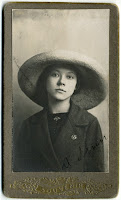
Ο δρόμος αυτός ονομάζεται
ΟΔΟΣ Asja Lācis
από το όνομα αυτής
που ως μηχανικός
τον διάνοιξε μέσα στον συγγραφέα
(Αφιέρωση του W. Benjamin στο βιβλίο του "Μονόδρομος", Βερολίνο 1928)
W.B. on the Web
"technical reproduction gives back what technical production takes away"-the availability of technically produced images allows a "new capacity to study modern existence reflectively"
Saturday, 1 May 2010
chaos game

http://en.wikipedia.org/wiki/Sierpi%C5%84ski_triangle
http://www.plosbiology.org/article/info:doi/10.1371/journal.pbio.0020424
Algorithms and information, fundamental to technological and biological organization, are also an essential aspect of many elementary physical phenomena, such as molecular self-assembly. Here we report the molecular realization, using two-dimensional self-assembly of DNA tiles, of a cellular automaton whose update rule computes the binary function XOR and thus fabricates a fractal pattern—a Sierpinski triangle—as it grows. To achieve this, abstract tiles were translated into DNA tiles based on double-crossover motifs. Serving as input for the computation, long single-stranded DNA molecules were used to nucleate growth of tiles into algorithmic crystals. For both of two independent molecular realizations, atomic force microscopy revealed recognizable Sierpinski triangles containing 100–200 correct tiles. Error rates during assembly appear to range from 1% to 10%. Although imperfect, the growth of Sierpinski triangles demonstrates all the necessary mechanisms for the molecular implementation of arbitrary cellular automata. This shows that engineered DNA self-assembly can be treated as a Turing-universal biomolecular system, capable of implementing any desired algorithm for computation or construction tasks.
Friday, 30 April 2010
A_mors
http://books.google.gr/books?id=IdyM5MmdPBcC&pg=PA269&lpg=PA269&dq=WILLIAM+E.+ENGEL&source=bl&ots=vwqLcgzHvm&sig=TExGioX8mh1iwtHJveIKWksWqcQ&hl=el&ei=xY7aS5elA4OVONCOyLMP&sa=X&oi=book_result&ct=result&resnum=8&ved=0CDgQ6AEwBw#v=onepage&q=WILLIAM%20E.%20ENGEL&f=false
Thursday, 29 April 2010
convolutions_or how to read Arcades Project

"One must have a rigid, easily retained order, with a definite beginning. Into this order one places the components of what one wishes to memorize and recall. As a money-changer ("nummularium") separates and classifies his coins by type in his money bag ("sacculum," "marsupium"), so the contents of wisdom's storehouse ("thesaurus," "archa"), which is the memory, must be classified according to a definite, orderly scheme."
O'Keefe and Nadel refer to "'the method of loci', an imaginal technique known to the ancient Greeks and Romans and described by Yates (1966) in her book The art of memory as well as by Luria (1969). In this technique the subject memorizes the layout of some building, or the arrangement of shops on a street, or any geographical entity which is composed of a number of discrete loci. When desiring to remember a set of items the subject literally 'walks' through these loci and commits an item to each one by forming an image between the item and any distinguishing feature of that locus. Retrieval of items is achieved by 'walking' through the loci, allowing the latter to activate the desired items. The efficacy of this technique has been well established (Ross and Lawrence 1968, Crovitz 1969, 1971, Briggs, Hawkins and Crovitz 1970, Lea 1975), as is the minimal interference seen with its use."
decoding Arcades Project

Mnemonic criticism as I have been outlining it has still other closely related applications. By investigating the popular emblems of death and accompanying doggerel, designed to remind the viewer of his or her ultimate end, we can rescue from obscurity some of the commonplace images and moral saws known to Catholics and Protestants alike. After all, with its explicit commemorative injunction to reflect on the motto “Memento Mori” [Remember your Death], the death's head is a focal emblem of the Renaissance. Treating the Book of Christian Prayers, better known as Queen Elizabeth's Prayer Book, in terms of mnemonic criticism enables us to elucidate the relation of the visual and textual properties of this popular work in ways never before attempted. Such an approach permits us to address the rationale behind the series of moral messages along the margins of this book which are conveyed by hieroglyphic memorials of man's transience and of God's grand design. Looking at the home prayer book in this way, at its messages and its method for conveying them, will make accessible to contemporary readers the ways the ars memorativa was expressed through and, in some cases, gave shape to contemplative texts.
Mnemonic Criticism & Renaissance Literature: A Manifesto

index_ content

But soft, my Genius; ere thou leade thy Reader into the Maze or Labyrinth of the beauties therin contained, pause heer a while, to consider how to behaue thy self . . . . First then shalt thou presente him with the Symbol it self, set-forth in manner of a Deuise, with an Imprese and Motto, expressing the allusion to the SACRED PARTHENES herself, in some mysterie of hers, [page 19] or attribute belonging to her . . . . Then looking back with a fresh reuiew on the Symbol itself, by way of an Essay, shalt thou make a fuller Suruey therof, discoursing on the Paragon herself, to match, compare, and paralel them togeather, to find out some Elogies or other, in prayse of our SACRED PARTHENES . . . . And after al, shalt thou inuite him to Apostrophize with the Paragon PARTHENES herself, vnder the Symbol so handled, being the vtmost scope, and ful fruition of the whole; and so conclude the peece with some boone or suite, correspondent to the present occasion, in euerie one. And this method would I haue thee keepe in al. (sig. A7v-A8v)
http://www.uni-tuebingen.de/uni/nec/engel11.htm
Mnemonica by Willis, John

Book description: London : printed and are to be sold by Leonard Sowersby, at the Turn-stile, near New-market, in Lincolns-Inn fields, 1661.. Octavo, . First edition of the Sowersby translation. A-M8 One full page woodcut of a (memory) theater . This copy is bound in full contemporary, sheep with blind ruled borders and spine. It exhibits light browning but is, otherwise, clean and free of defect. . Mnemonica is interesting chiefly because of its use of the Elizabethan theater as a memory locus. Dividing a theater in half, lengthwise, Willis produces what he terms a memory repository having two rooms, designed for very simple mnemotechnic, such as shopping lists or prices. The importance of Willis' work lies in its probable influence on Robert Fludd (1574-1637). In the second part of his Utriusque Cosmoi Maioris scilicet et Minoris, Metaphysica, Physica atque Technica Historia (Oppenheim, 1619), Fludd develops this use of the theater as a memory locus along Hermetic-cabalist lines. Frances Yates points out that Fludd uses as his model locus the famous Globe Theater in London. Willis may also be the inspiration behid Fludd's theaters of Night and Day in the zodiac, parts of an occult memory system. Mnemonica was translated into English by Leonard Sowersby in 1661.
Monday, 26 April 2010

Sunday, 25 April 2010
Ecce Homo: Wie man wird, was man ist

In the last chapter of his last book Nietzsche said "Why I am a Destiny". And then he walked into insanity.He was so right.
Saturday, 24 April 2010
Thursday, 22 April 2010
Tuesday, 20 April 2010
Friday, 16 April 2010


Monday, 12 April 2010

Sunday, 11 April 2010

Saturday, 10 April 2010
Friday, 9 April 2010

Thursday, 8 April 2010

Wednesday, 7 April 2010

Tuesday, 6 April 2010
P.R.A.N.K
"Loopback" IP addresses:
127.0.0.0 - 127.255.255.255
Each computer on the Internet uses 127.0.0.0/8 to identify itself, to itself. 127.0.0.0 to 127.255.255.255 is earmarked for what is called "loopback". This construct allows a computer to establish/validate its IP stack. Most software only uses 127.0.0.1 for loopback purposes (the other addresses in this range are seldom used). All of the addresses within the loopback address are treated with the same levels of restriction in Internet routing, so it is difficult to use any other addresses within this block for anything other than node specific applications, generally bootstraping. This is documented in RFC 5735.
A loopback interface has several uses. It may be used by network client software on a computer to communicate with server software on the same computer, viz., on a computer running a web server, pointing a web browser to the URLs http://127.0.0.1/ or http://localhost/ will access that computer's own web site. This works without any actual network connection–so it is useful for testing services without exposing them to security risks from remote network access. Likewise, pinging the loopback interface is a basic test of the functionality of the IP stack in the operating system.
Packets sent in an IP network with a source address belonging to the loopback interface can cause a number of problems for older or buggy network software. Such packets are known as "martian packets" [1]. The Internet Protocol specification dictates that such packets must not be transmitted outside of a host, and must be dropped if received on a network interface (cf. RFC 1700, RFC 2893).
One notable exception to the use of the loopback network addresses (127/8) is their use in Multiprotocol Label Switching (MPLS) traceroute error detection techniques (RFC 4379) in which their property of not being routable provides a convenient means to avoid delivery of faulty packets to end users.
Loopback addresses are the subject of a reasonably common Internet prank: directing an inexperienced user to connect to (or attack) his own loopback interface as if it were a remote server[2].
127.0.0.0/8 - This block is assigned for use as the Internet host
loopback address. A datagram sent by a higher-level protocol to an
address anywhere within this block loops back inside the host. This
is ordinarily implemented using only 127.0.0.1/32 for loopback. As
described in [RFC1122], Section 3.2.1.3, addresses within the entire
127.0.0.0/8 block do not legitimately appear on any network anywhere.
127.0.0.0 - 127.255.255.255
Each computer on the Internet uses 127.0.0.0/8 to identify itself, to itself. 127.0.0.0 to 127.255.255.255 is earmarked for what is called "loopback". This construct allows a computer to establish/validate its IP stack. Most software only uses 127.0.0.1 for loopback purposes (the other addresses in this range are seldom used). All of the addresses within the loopback address are treated with the same levels of restriction in Internet routing, so it is difficult to use any other addresses within this block for anything other than node specific applications, generally bootstraping. This is documented in RFC 5735.
A loopback interface has several uses. It may be used by network client software on a computer to communicate with server software on the same computer, viz., on a computer running a web server, pointing a web browser to the URLs http://127.0.0.1/ or http://localhost/ will access that computer's own web site. This works without any actual network connection–so it is useful for testing services without exposing them to security risks from remote network access. Likewise, pinging the loopback interface is a basic test of the functionality of the IP stack in the operating system.
Packets sent in an IP network with a source address belonging to the loopback interface can cause a number of problems for older or buggy network software. Such packets are known as "martian packets" [1]. The Internet Protocol specification dictates that such packets must not be transmitted outside of a host, and must be dropped if received on a network interface (cf. RFC 1700, RFC 2893).
One notable exception to the use of the loopback network addresses (127/8) is their use in Multiprotocol Label Switching (MPLS) traceroute error detection techniques (RFC 4379) in which their property of not being routable provides a convenient means to avoid delivery of faulty packets to end users.
Loopback addresses are the subject of a reasonably common Internet prank: directing an inexperienced user to connect to (or attack) his own loopback interface as if it were a remote server[2].
127.0.0.0/8 - This block is assigned for use as the Internet host
loopback address. A datagram sent by a higher-level protocol to an
address anywhere within this block loops back inside the host. This
is ordinarily implemented using only 127.0.0.1/32 for loopback. As
described in [RFC1122], Section 3.2.1.3, addresses within the entire
127.0.0.0/8 block do not legitimately appear on any network anywhere.
Wednesday, 31 March 2010
Saturday, 20 March 2010

Friday, 19 March 2010
Thursday, 18 March 2010
Wednesday, 17 March 2010
Monday, 15 March 2010
(((((("Can you hear me?"))))))
In medicine, a coma (from the Greek κῶμα koma, meaning deep sleep) is a profound state of unconsciousness. A person in a coma cannot be awakened, fails to respond normally to pain, light or sound, does not have sleep-wake cycles, and does not take voluntary actions. A person in a state of coma can be described as comatose.
Coma may result from a variety of conditions, including intoxication, metabolic abnormalities, central nervous system diseases, acute neurologic injuries such as stroke, and hypoxia. A coma may also result from head trauma caused by mechanisms such as falls or car accidents. It may also be deliberately induced by pharmaceutical agents in order to preserve higher brain function following another form of brain trauma, or to save the patient from extreme pain during healing of injuries or diseases. The underlying cause of coma is bilateral damage to the Reticular formation of the hindbrain, which is important in regulating sleep.
In the initial assessment of coma, it is common to gauge the level of consciousness by spontaneously exhibited actions, response to vocal stimuli ("Can you hear me?"), and painful stimuli; this is known as the AVPU (alert, vocal stimuli, painful stimuli, unconscious) scale. More elaborate scales, such as the Glasgow coma scale (see below), quantify individual reactions such as eye opening, movement and verbal response on a scale.
In those with deep unconsciousness, there is a risk of asphyxiation as the control over the muscles in the face and throat is diminished. As a result, those presenting to a hospital with coma are typically assessed for this risk ("airway management"). If the risk of asphyxiation is deemed to be high, doctors may use various devices (such as an oropharyngeal airway, nasopharyngeal airway or endotracheal tube) to safeguard the airway.
The outcome for coma and vegetative state depends on the cause, location, severity and extent of neurological damage. A deeper coma alone does not necessarily mean a slimmer chance of recovery, because some people in deep coma recover well while others in a so-called milder coma sometimes fail to improve.
Coma may result from a variety of conditions, including intoxication, metabolic abnormalities, central nervous system diseases, acute neurologic injuries such as stroke, and hypoxia. A coma may also result from head trauma caused by mechanisms such as falls or car accidents. It may also be deliberately induced by pharmaceutical agents in order to preserve higher brain function following another form of brain trauma, or to save the patient from extreme pain during healing of injuries or diseases. The underlying cause of coma is bilateral damage to the Reticular formation of the hindbrain, which is important in regulating sleep.
In the initial assessment of coma, it is common to gauge the level of consciousness by spontaneously exhibited actions, response to vocal stimuli ("Can you hear me?"), and painful stimuli; this is known as the AVPU (alert, vocal stimuli, painful stimuli, unconscious) scale. More elaborate scales, such as the Glasgow coma scale (see below), quantify individual reactions such as eye opening, movement and verbal response on a scale.
In those with deep unconsciousness, there is a risk of asphyxiation as the control over the muscles in the face and throat is diminished. As a result, those presenting to a hospital with coma are typically assessed for this risk ("airway management"). If the risk of asphyxiation is deemed to be high, doctors may use various devices (such as an oropharyngeal airway, nasopharyngeal airway or endotracheal tube) to safeguard the airway.
The outcome for coma and vegetative state depends on the cause, location, severity and extent of neurological damage. A deeper coma alone does not necessarily mean a slimmer chance of recovery, because some people in deep coma recover well while others in a so-called milder coma sometimes fail to improve.
Saturday, 13 March 2010
τέλεια πτώση
Αυτοί (οι Έλληνες τραγικοί) είχαν το σύστημα να διδάσκουν με παραδείγματα, μ’ ένα τρόπο πολύ
σοβαρό, ο οποίος όμως ήταν εξαιρετικά ευχάριστος και απολαυστικός. Και, ανακαλύπτοντας πως στην
Ιστορία το ίδιο τέλος εύρισκαν κι ο δίκαιος κι ο άδικος, πως η αρετή συχνά καταπιεζόταν και η κακία
βασίλευε, κατάλαβαν πως αυτές οι χθεσινές αλήθειες ήταν ατελείς και ακατάλληλες να εξηγήσουν τις
οικουμενικές και αιώνιες αλήθειες, στις οποίες οι ίδιοι απέβλεπαν. Ανακαλύπτοντας ακόμη πως αυτή η
άνιση κατανομή των αμοιβών και των ποινών έβαζε σε απορία και τον πιο σοφό, και πως η στάση του
Άθεου ήτανε μια πρόκληση στη Θεία Πρόνοια, συμπέραναν πως ο Ποιητής πρέπει αναγκαστικά να
φροντίζει ώστε η δικαιοσύνη να αποδίδεται αμερόληπτα, αν ο πραγματικός σκοπός του είναι να
ευχαριστήσει. Γιατί – έλεγαν – αν ο Κόσμος σπάνια μπορεί να ικανοποιηθεί από τον Παντοδύναμο Θεό,
που οι θείες βουλές του είναι ανεξήγητες, ένας ποιητής (το ίδιο) ποτέ δεν θα συγχωρεθεί αν δεν είναι
ακατανόητος (γι’ αυτό ήταν βέβαιοι), αν τις σκέψεις και τις μεθόδους του μπορεί κανείς, χωρίς ασέβεια,
να τις διαπεράσει και να τις εξηγήσει.
Thomas Rymer (The Tragedies of the Last Age), 1677
σοβαρό, ο οποίος όμως ήταν εξαιρετικά ευχάριστος και απολαυστικός. Και, ανακαλύπτοντας πως στην
Ιστορία το ίδιο τέλος εύρισκαν κι ο δίκαιος κι ο άδικος, πως η αρετή συχνά καταπιεζόταν και η κακία
βασίλευε, κατάλαβαν πως αυτές οι χθεσινές αλήθειες ήταν ατελείς και ακατάλληλες να εξηγήσουν τις
οικουμενικές και αιώνιες αλήθειες, στις οποίες οι ίδιοι απέβλεπαν. Ανακαλύπτοντας ακόμη πως αυτή η
άνιση κατανομή των αμοιβών και των ποινών έβαζε σε απορία και τον πιο σοφό, και πως η στάση του
Άθεου ήτανε μια πρόκληση στη Θεία Πρόνοια, συμπέραναν πως ο Ποιητής πρέπει αναγκαστικά να
φροντίζει ώστε η δικαιοσύνη να αποδίδεται αμερόληπτα, αν ο πραγματικός σκοπός του είναι να
ευχαριστήσει. Γιατί – έλεγαν – αν ο Κόσμος σπάνια μπορεί να ικανοποιηθεί από τον Παντοδύναμο Θεό,
που οι θείες βουλές του είναι ανεξήγητες, ένας ποιητής (το ίδιο) ποτέ δεν θα συγχωρεθεί αν δεν είναι
ακατανόητος (γι’ αυτό ήταν βέβαιοι), αν τις σκέψεις και τις μεθόδους του μπορεί κανείς, χωρίς ασέβεια,
να τις διαπεράσει και να τις εξηγήσει.
Thomas Rymer (The Tragedies of the Last Age), 1677
Thursday, 11 March 2010

Tuesday, 9 March 2010
Robohood
One of our most important living philosophers, Dan Dennett is best known for his provocative and controversial arguments that human consciousness and free will are the result of physical processes in the brain. He argues that the brain's computational circuitry fools us into thinking we know more than we do, and that what we call consciousness — isn't.
This mind-shifting perspective on the mind itself has distinguished Dennett's career as a philosopher and cognitive scientist. And while the philosophy community has never quite known what to make of Dennett (he defies easy categorization, and refuses to affiliate himself with accepted schools of thought), his computational approach to understanding the brain has made him, as Edge's John Brockman writes, “the philosopher of choice of the AI community.”
“It's tempting to say that Dennett has never met a robot he didn't like, and that what he likes most about them is that they are philosophical experiments,” Harry Blume wrote in the Atlantic Monthly in 1998. “To the question of whether machines can attain high-order intelligence, Dennett makes this provocative answer: ‘The best reason for believing that robots might some day become conscious is that we human beings are conscious, and we are a sort of robot ourselves.'”
This mind-shifting perspective on the mind itself has distinguished Dennett's career as a philosopher and cognitive scientist. And while the philosophy community has never quite known what to make of Dennett (he defies easy categorization, and refuses to affiliate himself with accepted schools of thought), his computational approach to understanding the brain has made him, as Edge's John Brockman writes, “the philosopher of choice of the AI community.”
“It's tempting to say that Dennett has never met a robot he didn't like, and that what he likes most about them is that they are philosophical experiments,” Harry Blume wrote in the Atlantic Monthly in 1998. “To the question of whether machines can attain high-order intelligence, Dennett makes this provocative answer: ‘The best reason for believing that robots might some day become conscious is that we human beings are conscious, and we are a sort of robot ourselves.'”
Saturday, 6 March 2010
Collective P.K.Dick and the abduction of Elizabeth

S.:Mr.Loncord claimed that on that Sunday afternoon he was in his office, writing his daily public announcement.Though Elizabeth testified they were having a friendly chat at about the same time at Maxin's.
W.:Do you think she's lying?
S.:According to the records, Mr. Loncord never visits his office during weekends my friend.It wasn't him writing the public announcement.
Monday, 1 March 2010
Saturday, 20 February 2010
The End of Certainty

In his 1997 book, The End of Certainty, Prigogine contends that determinism is no longer a viable scientific belief. "The more we know about our universe, the more difficult it becomes to believe in determinism." This is a major departure from the approach of Newton, Einstein and Schrödinger, all of whom expressed their theories in terms of deterministic equations. According to Prigogine, determinism loses its explanatory power in the face of irreversibility and instability.
Prigogine traces the dispute over determinism back to Darwin, whose attempt to explain individual variability according to evolving populations inspired Ludwig Boltzmann to explain the behavior of gases in terms of populations of particles rather than individual particles. This led to the field of statistical mechanics and the realization that gases undergo irreversible processes. In deterministic physics, all processes are time-reversible, meaning that they can proceed backward as well as forward through time. As Prigogine explains, determinism is fundamentally a denial of the arrow of time. With no arrow of time, there is no longer a privileged moment known as the "present," which follows a determined "past" and precedes an undetermined "future." All of time is simply given, with the future as determined or undetermined as the past. With irreversibility, the arrow of time is reintroduced to physics. Prigogine notes numerous examples of irreversibility, including diffusion, radioactive decay, solar radiation, weather and the emergence and evolution of life. Like weather systems, organisms are unstable systems existing far from thermodynamic equilibrium. Instability resists standard deterministic explanation. Instead, due to sensitivity to initial conditions, unstable systems can only be explained statistically, that is, in terms of probability.
Prigogine asserts that Newtonian physics has now been "extended" three times, first with the use of the wave function in quantum mechanics, then with the introduction of spacetime in general relativity and finally with the recognition of indeterminism in the study of unstable systems.
[wikipedia]
Wednesday, 17 February 2010
Saturday, 13 February 2010
twilight zone_temps du loup
and fathers forgot how to be fathers (that is to inspire and protect)
and mothers forgot how to be mothers (that is to love and give hope)
and the world was filled with orphans of all ages
and mothers forgot how to be mothers (that is to love and give hope)
and the world was filled with orphans of all ages
Thursday, 11 February 2010
Tuesday, 9 February 2010
Thursday, 4 February 2010
open sets
"Michel Foucault finds in Raymond Roussel's works and days an entire cosmos, whose principle of unity is the principle of the threshold, which is also the principle of the parenthesis. The Rousselian cosmos is replete with thresholds, microscopic and galactic. It is itself the vastest parenthesis, forever posed between the radical originality of a birth to which it owes its existence but can never authentically produce and the silent infinitude of a death that it ubiquitously foreshadows but can never encompass. Its cosmogony must remain something of a mystery as a consequence. So, too, its teleology. It is nevertheless, clearly divisible into two parts, two phases.In its youthful phase, it glows with the light of a radiant and sovereign sun.It is a place of relentless spectacle, of sheer visibility, but of a luminocity so intense that it can be disorientating, even blinding. It is thus a place in which what is most fully exposed has perhaps the best chance of remaining secret."
Subscribe to:
Posts (Atom)
